Industrial Displays: A Practical Guide for Modern Equipment and Embedded Systems
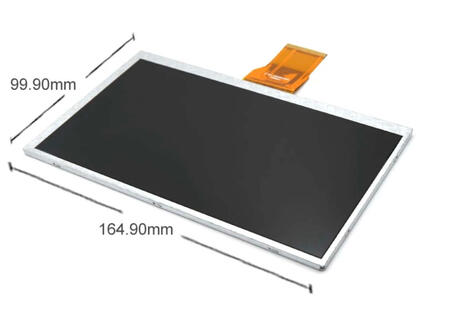
Industrial displays are an essential part of many modern machines, control panels, embedded devices, and automation systems. Unlike consumer displays used in laptops, tablets, or home electronics, industrial displays are designed for long-term operation, stable performance, and reliable use in demanding environments. They are widely used in factory equipment, medical devices, outdoor terminals, transportation systems, EV chargers, energy storage systems, marine electronics, agricultural machines, and industrial HMI panels.The main purpose of an industrial display is to present information clearly and reliably. In a machine control system, the screen may show operating status, alarm messages, production data, parameter settings, maintenance instructions, and real-time charts. In a medical or laboratory device, the display may show test results, user guidance, measurement data, and warning information. In outdoor terminals, it may show payment steps, QR codes, maps, status messages, or user instructions.A key difference between industrial displays and ordinary consumer displays is durability. Industrial equipment may operate in places with high temperature, low temperature, humidity, dust, vibration, electrical noise, or strong sunlight. A standard consumer display may work well in an office but fail quickly in these environments. Industrial displays are usually built with stronger components, better backlights, wider temperature support, more stable interfaces, and more reliable mechanical structures.TFT LCD technology is one of the most common choices for industrial displays. TFT LCDs offer good image quality, reasonable cost, mature supply chains, and a wide range of sizes. Common industrial display sizes include 3.5 inch, 4.3 inch, 5 inch, 7 inch, 10.1 inch, 12.1 inch, 15 inch, and larger panels. Smaller displays are often used in handheld devices and compact controllers, while larger displays are used in HMI panels, kiosks, medical equipment, and industrial computers.Brightness is an important specification for industrial displays. Indoor equipment may only need standard brightness, such as 300 to 500 nits. Outdoor or semi-outdoor products may require 800 nits, 1000 nits, or even higher brightness. However, brightness alone does not guarantee readability. Surface reflection, contrast ratio, viewing angle, optical bonding, and cover glass design also affect how clearly the user can see the screen.For outdoor or high-ambient-light applications, optical bonding is often useful. In a standard display structure, there may be an air gap between the LCD, touch panel, and cover glass. This air gap causes internal reflections and reduces contrast. Optical bonding fills the gap with a transparent adhesive, reducing reflection and improving readability. It also improves mechanical strength and reduces the risk of condensation inside the display stack.Viewing angle is another important factor. Many industrial devices are not always viewed directly from the front. Operators may look at the display from above, below, or the side. IPS displays are often preferred because they provide wide viewing angles and stable color performance. This is especially useful for industrial HMI panels, vehicle displays, medical terminals, and public devices.Touch panel integration is also common in industrial displays. Projected capacitive touch panels provide a smooth and modern user experience, similar to smartphones and tablets. They are suitable for HMI systems, smart control panels, and commercial terminals. However, industrial touch applications may require glove support, water rejection, thick cover glass, anti-interference tuning, and reliable operation under electrical noise. In some harsh environments, resistive touch or physical buttons may still be used.The display interface must match the main control board or SBC. Common industrial display interfaces include RGB, LVDS, MIPI DSI, HDMI, VGA, eDP, and sometimes USB or SPI for small screens. LVDS is widely used in industrial applications because it supports stable high-speed transmission over moderate cable lengths. MIPI DSI is common in compact embedded systems and Android-based products. HDMI is convenient for standard SBCs and industrial computers.Mechanical design is another critical part of industrial display integration. The LCD module, touch panel, cover glass, gasket, front frame, PCB, cables, and enclosure must work together. Uneven pressure on the LCD can cause light leakage, mura, or touch problems. Poor cable routing can cause EMI issues or reliability problems. For outdoor or wash-down environments, the front panel may need sealing against water and dust.Long-term availability is very important for industrial products. A consumer display model may change quickly, but industrial equipment often needs the same display for many years. Product teams should choose display suppliers that can support long lifecycle requirements, stable specifications, and controlled hardware revisions. If a display is discontinued, the product may need mechanical redesign, software changes, certification updates, and additional testing.Reliability testing should be done before mass production. Tests may include high-temperature operation, low-temperature startup, temperature cycling, humidity testing, vibration testing, backlight aging, touch operation, ESD testing, and long-term power-on testing. Outdoor displays should also be tested under sunlight, rain, dust, and real installation conditions. A display that looks good during a short indoor test may not be suitable for field use.When selecting an industrial display, engineers should consider screen size, resolution, brightness, viewing angle, operating temperature, interface type, touch panel structure, cover glass strength, optical bonding, surface treatment, power consumption, mechanical dimensions, and supply stability. The best display is not always the highest-resolution or brightest one. It is the display that matches the product’s environment, enclosure, electronics, software, and lifecycle requirements.In conclusion, industrial displays are a core component of modern embedded and automation products. They connect users with machines, data, and control systems. A well-selected industrial display improves usability, reliability, and product quality. For industrial HMI panels, medical devices, outdoor terminals, energy systems, transportation equipment, and smart control products, display design should be considered early in the project. When the LCD, touch panel, mainboard, enclosure, and software are planned together, the final product can achieve better performance and long-term stability.